Beyond the Build: Lessons from Supporting an Energy Transition Platform for Southeast Asia
by Peter du Pont, Ayesa Lemence, Sukanya Supawarikul, and Drishti Chhibber Over the past five years, Asia Clean Energy Partners (ACE Partners) has worked with GIZ and the CASE for Southeast Asia team to help develop and grow the Southeast Asia Information Platform for the Energy Transition (SIPET) into a trusted regional resource. Today, SIPET brings together energy transition initiatives, data, tools, and knowledge from across Southeast Asia. Its Project Mapping Tool now documents 519 projects representing around USD 52 billion in funding, while average monthly visits increased from around 3,000 in 2025 to 5,000 between January and July 2026.
These milestones show how far the platform has come, but they capture only part of what we learned in the process. Designing a regional knowledge platform is only the beginning. Keeping it useful, trusted, current, and relevant over time is the greater challenge. This has been one of the clearest lessons from our experience supporting the design, launch, and operation of SIPET. Created under the CASE for Southeast Asia project of GIZ, SIPET was developed in response to a severely fragmented regional information landscape in the region. The primary challenge is balkanization: data on energy use and trends, policies and regulations, technical assistance and research projects, and knowledge products is spread across hundreds of different institutions and sources. And there are literally hundreds of donor assistance projects supporting the energy transition across Southeast Asia, with billions of dollars of investment, without an exchange or clearinghouse where information on these projects can be transparently shared. SIPET set out to bring those pieces together and make them easier to find, understand, and use. From the outset in 2021, ACE Partners worked closely with GIZ and the CASE team to support the ambition of a regional, dynamic, and accessible knowledge platform for government and private sector stakeholders working in the energy transition. Our work involved identifying and curating useful sources of information on (a) energy data and trends, (b) progress toward achieving an energy transition, (c) donor-funded projects to provide technical assistance and capacity-building; and (d) events and knowledge products that were driving the ideas and thinking of leaders and practitioners in Southeast Asia’s energy sector. Our objectives were to design a simple user interface, curate and maintain the data, information, and knowledge products, and provide a platform that could engage stakeholders, and strengthen the platform’s visibility and relevance. In the process of working toward these objectives, we learned that the long-term value of a knowledge platform depends on much more than what is built online. It depends crucially on whether people use it, trust it, contribute to it, and whether the systems, resources, and institutional ownership exist to keep it relevant. In September 2026, SIPET will enter its next chapter, as it is transferred into the custody of the ASEAN Center for Energy and integrated into its new data and information platform, the ASEAN Energy Data System (AEDS). In this post, we reflect on some of the key lessons we have learned along the way, over the past five years.1. A platform becomes valuable when it supports users’ work
It is easy for a knowledge platform to become a repository: a place where more and more information accumulates. One of the clearest lessons from SIPET has been to start with what users need to do, rather than with how much information the platform can contain. SIPET was designed with an iterative approach, and evolved to bring together several different functions, including a Project Mapping Tool, a Knowledge Hub, modules on power-sector data and insights, power plant trackers, a policy tracker, country snapshots, and other analytical resources. But the value of these tools lies not simply in how much information they contain. It lies in the questions they help users answer: Where are energy transition projects already taking place? Where is development finance flowing? What are the latest power-sector trends? Where might there be gaps, overlaps, or opportunities for collaboration? This principle has influenced our support to the platform: making information not only available, but structured, understandable, and relevant to decisions energy stakeholders are actually making.2. Every new dataset creates an ongoing responsibility
The Project Mapping Tool is arguably the most valuable module on the SIPET platform, but it demonstrates the challenge of data maintenance and upkeep. ACE Partners has supported the ongoing curation and updating of the database underlying the Project Mapping Tool, which has grown to include more than 500 energy transition projects across Southeast Asia. This has involved bringing together information from different sources, checking and standardizing project details, and filling gaps where information was incomplete.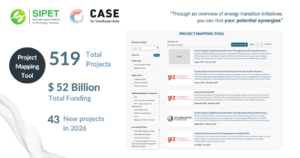
Figure 1. Overview of the Project Mapping Tool
That process taught us an important lesson: every dataset creates an ongoing responsibility, and liability. Project information changes. Funding amounts are updated. Projects move from planning to implementation or completion. Information may be published differently across institutions, or disappear from websites altogether. At a regional scale, maintaining current information can therefore require as much effort as creating the database in the first place. For future knowledge platforms, maintenance cannot be treated as something that happens after launch. Questions around who provides information, who validates it, how frequently it should be updated, and what resources are required need to be considered as part of the platform’s design from the beginning.3. An online platform does not automatically create a community
SIPET was conceived as more than a website. Its ambition was to become an open source platform that connects people, projects, data, and knowledge across Southeast Asia. But another lesson became clear over time: simply creating digital spaces for interaction does not automatically create a community. Engagement has to be actively cultivated. For SIPET, this has included newsletters, LinkedIn communications, webinars, expert interviews, participation in regional events, direct outreach to partners, and collaboration with organizations contributing data and knowledge. ACE Partners supported many of these efforts, including two interview-based knowledge series that extended SIPET’s role beyond information provision. Transition Finance in Southeast Asia brought together perspectives on financing the region’s transition, while the Transition Toolbox highlighted practical tools, programmes, and approaches already being applied across Southeast Asia.
Figure 2. Experts featured in the SIPET Connect Transition Finance Series
Together, these initiatives helped SIPET move beyond collecting information toward facilitating applied knowledge and peer learning. Our experience reinforced that communications and stakeholder engagement are not add-ons to a knowledge platform; they are part of its core operations.