Asia’s breweries can tackle energy crisis with electrification
By Peter du Pont, Co-Founder and Co-CEO, Asia Clean Energy Partners, and Mikael Jakobsson, Founder and President, Asia Pacific Urban Energy Association
This op-ed was originally published on Asia Brewers Network.
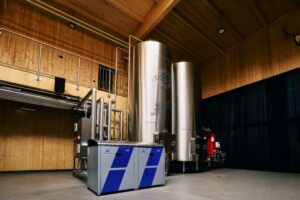
Photo Credit: Löwenherz Privatbrauerei
While conflict rages on in the Middle East, Asia’s breweries are experiencing the intensifying impacts of gas price volatility.
When the Strait of Hormuz closed earlier this year, the
Philippines warned that power prices could rise 16% in a single month, while
Vietnam urged employers to let staff work from home to conserve its stock of oil reserves.
Thailand’s proposal to shift a greater share of LNG costs onto industrial gas users caused widespread concern. These shocks are still reverberating; just last month, Asian LNG prices jumped to their
highest level since 2022, more than double pre-Iran war levels.
If you’re a manufacturer in Southeast Asia, you already know this story all too well. You have lived through a year or more of energy shocks that had nothing directly to do with your business but everything to do with your bottom line. The good news is that you do not have to brace yourself for the next energy crisis to inevitably hit.
The first step that brewers can take to save costs is to investigate how much existing heat can be recovered and reused. Brewing runs on steam and hot water. Mashing, wort boiling, cleaning, pasteurisation and other processes all depend on a steady supply of thermal energy, and most of it is still generated by burning fossil fuels. In many cases, reducing, recovering and cascading heat between processes can cut the amount of thermal energy that needs to be produced in the first place.
Once that heat loss is addressed, brewers can adopt a proven technology that is already available to safeguard against volatile gas prices: electrically-produced heat. Dependence on burning fossil fuels is what ties your energy bill to the price of a commodity traded thousands of miles away, and shipped through waters that can close overnight due to geopolitics beyond your control.
Electrification breaks that chain. Industrial heat pumps and other commercially available technologies can convert electricity directly into the heat needed for your brewing processes. Increasingly, that power is already flowing from cheaper, more stable, domestic renewables. Instead of paying whatever imported LNG costs on any given week, you pay a predictable price you can plan your business around.
We have seen this work in practice, from two different vantage points. One of us has spent more than 35 years advising businesses across Asia on technology adoption, policy frameworks, and investment into clean energy systems. The other has developed and optimised more than 150 urban energy systems for efficiency and sustainability across the region, from Bangkok to Beijing. Between us, we’ve watched electrification move from pilot projects to large scale system integration.
Major breweries in Asia are already running on electricity produced at a commercial scale, without compromising the quality or consistency of the product. For example,
Budweiser’s brewery in Ziyang, China, became the first in the country to swap out gas and install electric boilers, and
Heineken’s Vung Tau brewery in Vietnam recently installed a heat pump to cut thermal energy load and carbon emissions. These are smart commercial decisions made by brewers who did the maths and saw the benefits for efficient, sustainable system design.
Ultra-efficient industrial heat pumps can now reach up to 200°C, which covers all brewery manufacturing processes. In breweries, heat pumps have an additional advantage: they can connect two utility systems that are normally considered separately. Heat rejected from refrigeration and cooling processes can become a source for hot water or higher-temperature heat, turning what was previously waste heat into a useful energy stream. Electric boilers, solar thermal collectors, mechanical vapour recompressors, and thermal energy storage systems can also contribute to replacing fossil fuels in breweries. Meanwhile, a hybrid setup with conventional boilers can still deliver cost benefits while you plan for a longer-term transition.
In sunny parts of Asia, solar thermal deserves particular attention: rather than converting solar energy into electricity, and then back into heat, it can supply process heat directly, including many of the hot water and steam requirements found in breweries. For lower- and medium-temperature processes, direct solar heat can therefore be one of the simplest routes to reducing both gas consumption and exposure to fuel-price volatility. Thermal storage can make this combination considerably more powerful, allowing solar heat, recovered heat and heat-pump production to be stored and used whenever the brewing process requires it.
Of course, electricity prices can be volatile too, and buying renewable power directly is still challenging in some markets. But ultra-efficient heat pumps use a fraction of the energy of a conventional boiler for the same output, so the efficiency gain itself shortens the payback period, even when grid prices are high. The regional power mix is also shifting fast: in direct response to this year’s energy crisis; the
Philippines fast-tracked 1.47 gigawatts of renewable and storage capacity onto the grid, specifically to protect against fossil fuel price shocks. In fact, local electrification, with distributed solar rooftop and storage, increases resilience and overall system costs for the electric grid. This pivot towards distributed energy is a security strategy and not just a sustainability talking point.
The key to approaching decarbonization and electrification of breweries is to begin by designing one integrated energy system: minimise thermal demand, recover and cascade available heat, match each remaining demand to the appropriate temperature level, and only then decide the optimal combination of solar thermal, heat pumps, electric boilers, renewable electricity, storage and conventional backup.
Ultimately, the biggest opportunity may come from looking beyond individual pieces of equipment: a brewery is simultaneously a heat, cooling, electricity, water and wastewater system, and integrating those flows can unlock efficiencies that are invisible when each utility is optimised separately.
Do not wait for the next shock to force your hand – start now with three concrete steps:
- First, get an energy audit of your thermal load. You cannot electrify what you haven’t measured, and most breweries are surprised by how much of their process heat sits below the temperature threshold heat pumps already provide. Map both heat demand and available waste heat by temperature and time, rather than looking only at total annual energy consumption.
- Second, talk to suppliers operating in your market. Technologies like heat pumps are commercially available across Asia today, and a short conversation will tell you more about your options than a year of watching gas prices. You should also identify renewable energy procurement options, such as on-site solar and off-site power purchase agreements, and talk to your utility provider to discuss potential upgrades to your electricity supply. For suitable sites, this assessment should also include direct solar thermal, heat recovery and thermal storage.
- Third, learn from existing success stories before you build a business case from scratch. Case studies are being compiled now at brewedclean.com, part of the Brewed with Clean Heat project, which is documenting real brewery electrification projects and providing free resources to brewers across Europe and Asia.
The bottom line is that gas prices are not going to become predictable again in the long term. Fossil fuel scarcity and geopolitics will be constant wild cards, and your brewery’s energy bill will keep fluctuating unless you change what that bill depends on. Electrification will not insulate you from every cost pressure, but it will take the single most volatile one – energy prices – largely off the table. And electrification does not have to act alone: combined with efficiency, heat recovery, direct renewable heat and thermal storage, it can form part of a much more resilient integrated energy system. The technology is proven, it is available in your market, and your competitors are already using it. The only real question is how soon you start.
To find out more about brewery electrification and explore case studies, please visit
www.brewedclean.com
Peter du Pont is Co-Founder and Co-CEO of Asia Clean Energy Partners, a Bangkok-based advisory firm that has supported clean energy policy, investment and project delivery across more than 18 Asia-Pacific countries. He has more than 40 years experience in the clean energy field, and has been based in Bangkok since 1990. He has been a regional leader in efforts related to energy efficiency and productivity, demand-side management, demand response, and decarbonization.
Mikael Jakobsson is Founder and President of the Asia Pacific Urban Energy Association, a Bangkok-based platform supporting public and private sector collaboration on sustainable urban energy systems, including district heating and cooling, smart grids and industrial energy efficiency, across the Asia-Pacific region. He is also the Co-Founder of NXITY, multidisciplinary business consulting firm, specialised in development, project management, system analysis, and system optimization, of integrated urban and industrial energy schemes. He has more than 25 years of experience across Europe and Asia, with extensive experience in China.